Why Ceiling Paint Is Its Own Discipline
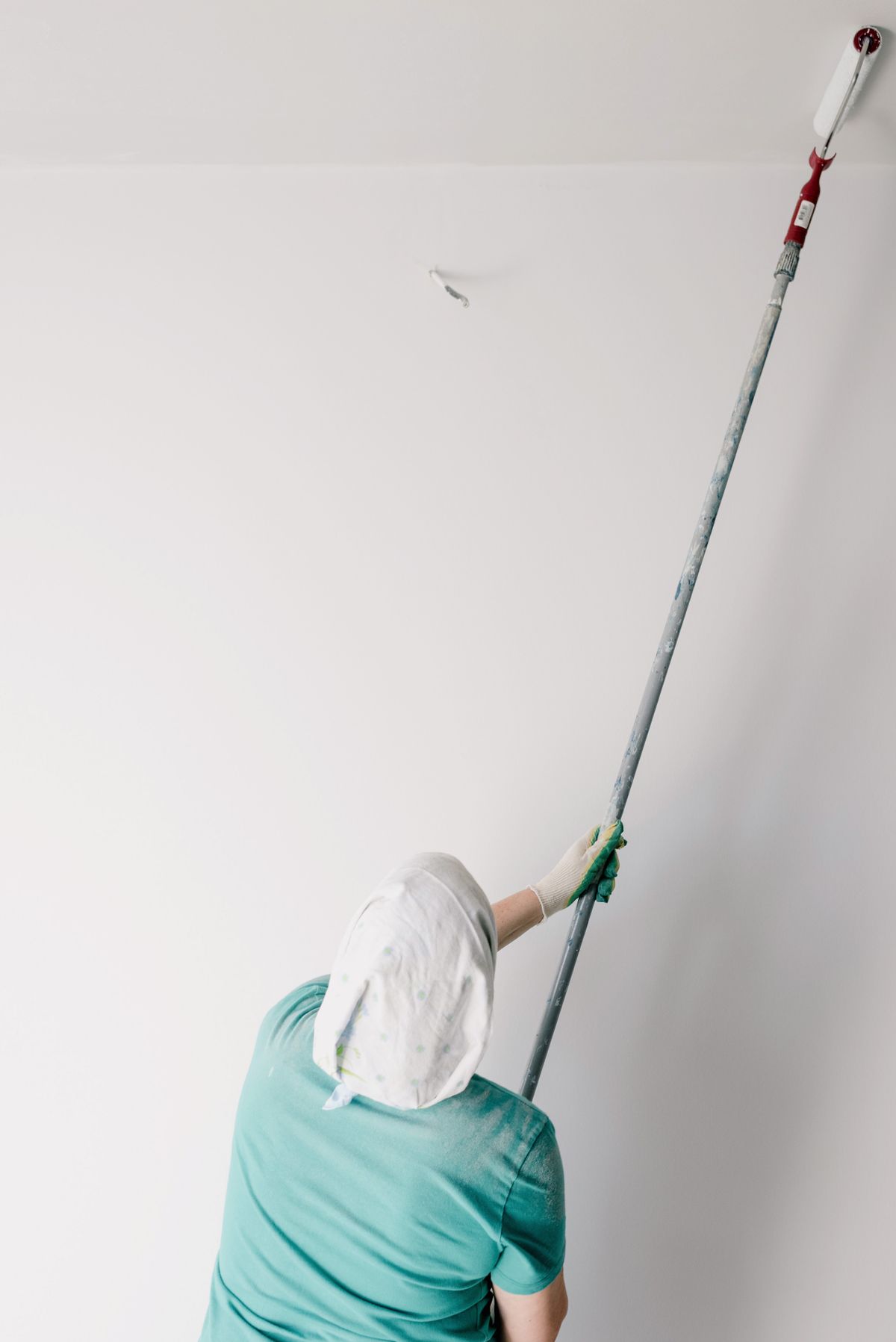
Ceilings are the largest uninterrupted surface in the house, lit from the side by big Southwest windows — the exact conditions that expose lap marks, flashing, and thin spots. Walls forgive; ceilings don't. Getting them right takes the correct primer for the surface underneath, a dead-flat sheen that hides rather than highlights, consistent wet-edge technique, and clean cut lines where ceiling meets wall. That's a different afternoon than rolling a bedroom wall, and it's why "we'll just paint it ourselves after the scraping" so often turns into a callback.
Painting is bundled into most popcorn removal and retexturing projects here, but standalone ceiling repaints — a kitchen dulled by two decades of cooking film, a hallway yellowed by an old wall heater, a whole house prepping for listing photos — are welcome projects on their own.
What a Professional Ceiling Paint Job Includes
The right primer, every time
Fresh compound after a skim coat drinks paint unevenly and needs a sealing primer. Water stains need a dedicated stain-blocker — ordinary primer lets swamp-cooler rings bleed back through. Glossy old paint needs a bonding coat. Surface dictates primer; no skipping.
Dead-flat, ceiling-grade paint
Flat paint scatters light and hides surface texture; anything shinier turns every ripple into a spotlight under raking sun from a west-facing window. High-build ceiling paints also resist roller spatter — kinder to your floors and the crew's timeline.
Crisp lines and protected rooms
Furniture out or wrapped, floors covered, fans and fixtures masked or dropped, and cut lines at the wall sharp enough that you don't need crown molding to hide them.
Color guidance for high-desert light
Bright ultra-white maximizes bounce in darker North Valley rooms; softer warm whites flatter earth-toned Southwest interiors and Saltillo floors; a barely-there tint can calm glare in sun-blasted rooms facing the West Mesa. Samples beat guessing.
Fast Dry Times, Real Schedules
Albuquerque's mile-high, low-humidity air is a painter's friend: recoat windows shrink, and a two-coat ceiling that would be a two-day job in a humid climate often finishes in one. A typical single-room ceiling repaint is a same-day affair; a whole single-story house usually paints in one to two days once prep is done. The flip side of desert speed is that paint can dry too fast, flashing where a roller edge set up early — one more reason technique and the right products matter more here than in mild climates.
When to book it
- Right after removal or retexture — the natural final step, priced into the project.
- Before listing photos — ceilings read as "well maintained" in every MLS shot.
- After a repair — painting to the room's break lines makes the patch vanish. See ceiling repair.
- After cooler-to-AC conversion — seal and repaint where the old penetrations were patched.
A Word About Painting Over Popcorn
Rolling paint onto existing popcorn texture is possible — and mostly a one-way door. Paint glues the texture together, which means future wet-scraping becomes far harder and pricier, and on a pre-1990s ceiling it also means disturbing suspect material with a roller today. If your popcorn has never been painted and you think you might ever want it gone, get the removal quote before you paint. If it's already painted, no harm done — the quote simply accounts for it. Either way, test older texture first.
Ceiling Painting FAQs
Can you match my ceiling paint to the walls?
Yes — same color in flat sheen on the ceiling is a popular modern look that makes rooms feel taller and cocooned. The classic contrast of white ceiling over colored walls maximizes brightness. Both get sampled in your actual light before committing.
How many coats does a ceiling need?
Two finish coats over appropriate primer is the durable standard. One-coat promises tend to look fine at noon and streaky at sunset — and sunset light is a daily event in Albuquerque.
Is there a bad season for interior painting here?
Not really — interior work runs year-round. Dry spring and fall days are ideal for ventilation; monsoon afternoons just mean windows close for an hour. Low-odor, low-VOC ceiling paints keep the house livable throughout.
Spray or roll — which is better for ceilings?
Both have their place. Spraying lays down the most uniform film on big open ceilings and textured surfaces, but it demands serious masking in a furnished home. Rolling with a high-quality cover suits occupied houses and back-rolling after a spray pass gives texture the best bite. In practice the crew chooses per room — empty great room, spray; furnished bedroom, careful rolling — and the finish should look identical either way.
Do you paint vigas and wood ceilings?
Exposed vigas and tongue-and-groove planks are usually best left natural or clear-sealed rather than painted — but the drywall bays between them can be refreshed to make the wood pop. Pueblo-style ceilings get a plan of their own during the free walkthrough.
Finish the Job Overhead
Primed right, painted flat, cut clean — get a free quote for one ceiling or every ceiling in the house.